Non-Surgical Varicose Vein Treatment with Wonder Axon
Non-surgical varicose vein treatment with Wonder Axon uses high-intensity focused ultrasound (HIFU) to heat and close a Doppler-mapped target vein from outside the skin, with no incision or catheter. It is an outpatient procedure, and many people return to daily activities the same day. Suitability, anaesthesia and expected results depend on the individual vein map and clinical examination.
- Wonder Axon is a HIFU-type device: focused ultrasound energy is delivered through intact skin to close a selected varicose vein, and nothing enters the vein.
- Treatment is planned on a Doppler ultrasound vein map, which decides whether a vein is suitable and where the energy is focused.
- The target vein is closed, not removed; blood is redirected through healthy veins and the sealed vein is gradually absorbed.
- Published HIFU trials of a comparable system report 12-month closure rates around 97%; device-specific and individual results vary, so expectations are set after assessment.
- Most patients return to daily activities the same day; follow-up scans, and compression when advised, remain part of the plan.
Non-surgical varicose vein treatment with Wonder Axon is an incision-free procedure that uses high-intensity focused ultrasound (HIFU) to close a selected leg vein from outside the skin. Wonder Axon belongs to the same technology family as the HIFU vein systems studied in the medical literature, sometimes called “echotherapy”: ultrasound energy is focused on a vein that has been mapped with Doppler ultrasound, the vein wall is heated and sealed, and no catheter or surgical instrument enters the leg. It is one of several varicose vein treatment options that may be discussed after a Doppler ultrasound assessment, and it is usually carried out as an outpatient procedure.
Wonder Axon at a glance
| Question | Short answer |
|---|---|
| What is it? | A HIFU-type (high-intensity focused ultrasound) treatment that closes a varicose vein from outside the skin |
| Incision or catheter? | None. The vein is not cut, punctured or entered |
| How is it planned? | With a Doppler (duplex) ultrasound vein map before treatment |
| Where is it done? | Outpatient setting; local anaesthesia is used when the plan requires it |
| Return to daily activities | Often the same day; individual advice may differ |
| Who may be suitable? | People with a refluxing superficial vein that the vein map shows can be targeted safely |
| Who is usually not suitable? | Pregnancy, active deep vein thrombosis, and vein patterns the focused beam cannot reach; decided at examination |
| Published evidence | HIFU vein-closure trials of a comparable system report around 97% occlusion at 12 months; device-specific results vary |
| Assessment | Op. Dr. Arzu Ercan, Acıbadem Kozyatağı Hospital, Istanbul |
What is Wonder Axon, and how does it treat varicose veins?
Wonder Axon is a high-intensity focused ultrasound (HIFU) system for varicose veins. It concentrates ultrasound energy from outside the body onto a mapped target vein, heating a small, precisely located segment of the vein wall so that the vein closes. Once the vein is closed, blood is redirected through other healthy veins in the leg, and the sealed vein is gradually absorbed by the body over the following months. Because the energy is delivered through intact skin, it is described as a non-invasive, incision-free approach rather than an operation.
The everyday term “varicose veins” usually refers to enlarged superficial veins whose valves no longer keep blood moving upwards efficiently, so some blood flows backwards (reflux). Wonder Axon is one possible approach within vein care, not a universal answer for every visible vein or every symptom pattern: whether a particular vein is suitable for closure depends on how that faulty flow is distributed across the venous system, which is exactly what the Doppler ultrasound vein map shows.
Does Wonder Axon remove the vein or close it?
It closes the vein; it does not remove it. “Removal” is the word many people type into a search bar, but Wonder Axon aims to seal a selected vein rather than pull it out surgically. A vein that has been closed no longer carries the problematic backward flow, and venous return continues through veins that are working normally. The closed vein shrinks and is reabsorbed over time, which is the same end point reached by laser, radiofrequency and foam treatments.
The way surface veins look afterwards, and the pace at which symptoms such as heaviness or aching change, may not follow the same timeline in every person. Some bulging veins settle gradually once the feeding vein is closed, while others may need separate assessment or a different method. A clinician’s examination, together with imaging, determines whether the target vein is appropriate for closure in the first place.
How does the procedure work, step by step?
Treatment follows four steps: mapping, marking, focused ultrasound delivery and a check scan.
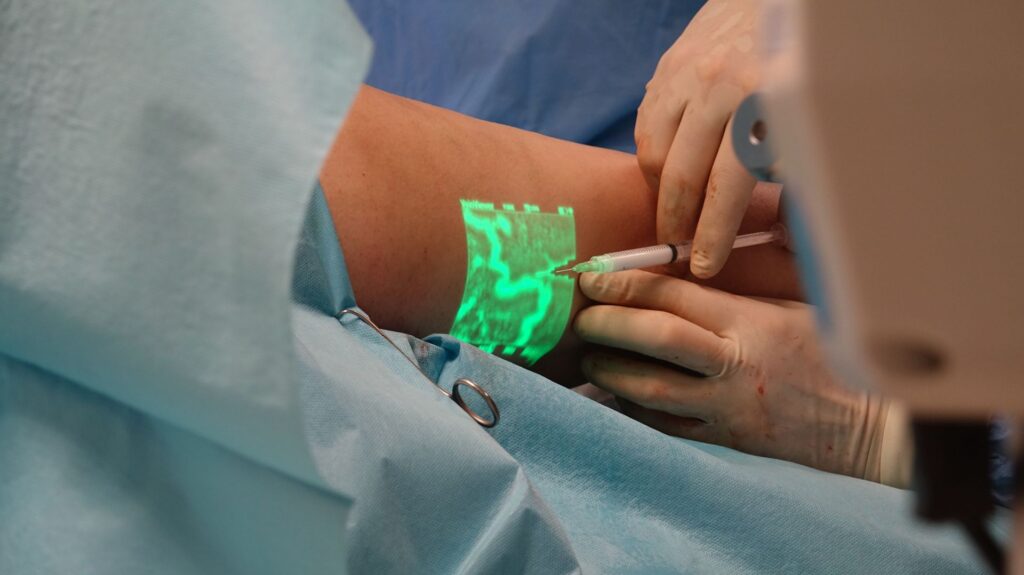
First, Doppler ultrasound is used to trace the course of the veins and to show which segments are linked to reflux or to the reported symptoms. Mapping is an important part of planning, although it does not by itself establish every diagnosis; the findings are interpreted alongside the clinical examination and the person’s history. Second, the segment to be treated is marked on the skin. Third, the treatment head is placed on the skin over the vein and delivers focused high-intensity ultrasound pulses to the vein wall under continuous imaging guidance, moving along the planned segment in steps. Finally, the treated vein is checked with ultrasound to confirm closure, and follow-up is arranged.
Laboratory studies of focused ultrasound on veins show heat-related changes in the vein wall (coagulation, thrombotic occlusion and later fibrosis) that resemble those seen after radiofrequency and laser ablation, which is why HIFU is regarded as a thermal closure method delivered without a catheter. The procedure is generally carried out in an outpatient setting; some HIFU protocols are performed without anaesthesia, while local anaesthesia is used when the vein depth, the length of the segment or the person’s comfort require it.
Who is a good candidate for non-surgical varicose vein treatment?
A good candidate has a refluxing superficial vein that the Doppler map shows can be targeted safely from the skin surface, and no condition that rules out vein closure at that time. Many varicose vein cases can be considered for a non-surgical approach, but the method that suits a particular leg depends on the vein pattern, the symptoms, any skin changes, clotting history and the Doppler findings. Non-surgical does not automatically mean appropriate: vein treatment methods are matched to the clinical findings and the imaging rather than chosen because a procedure carries the label “non-surgical”.
Wonder Axon is generally not used during pregnancy, when interventional vein treatment is deferred, or when there is an active deep vein thrombosis. Veins that lie very close to the skin surface or to nerves, or that the focused beam cannot reach cleanly, may be better served by another method. Surgical techniques may still be considered when the vein anatomy or the treatment goals call for them. Method selection follows the clinician’s examination and vein assessment rather than patient preference alone.
Wonder Axon vs laser, radiofrequency, glue and foam: how do they compare?
The useful distinction between techniques is where the energy or agent is delivered. Wonder Axon focuses ultrasound energy from outside the body, whereas endovenous laser ablation (EVLA), radiofrequency ablation (RFA) and cyanoacrylate glue pass a thin catheter inside the vein through a needle puncture, foam sclerotherapy injects an agent into it, and surgery removes or ties off the vein through incisions. Which of these is considered depends on vein size, location, the reflux pattern, symptom burden, previous treatment and the person’s wider health context.
| Method | How the vein is closed | Enters the vein? | Skin incision? | Anaesthesia (typical) | Return to daily activities |
|---|---|---|---|---|---|
| Wonder Axon (HIFU) | Focused ultrasound heats and seals the vein wall from outside | No | No | None or local, depending on the plan | Often the same day |
| Endovenous laser ablation (EVLA) | Laser fibre inside the vein heats it closed | Yes, via catheter | Needle puncture only | Tumescent local anaesthesia | Usually within a few days |
| Radiofrequency ablation (RFA) | Radiofrequency catheter heats the vein wall | Yes, via catheter | Needle puncture only | Tumescent local anaesthesia | Usually within a few days |
| Cyanoacrylate glue | Medical adhesive seals the vein | Yes, via catheter | Needle puncture only | Local anaesthesia at the puncture site | Often the same day |
| Foam sclerotherapy | Injected foam irritates the vein lining so it closes | Yes, by injection | No | Usually none | Same day; compression often advised |
| Surgery (ligation and stripping) | Vein is tied off and removed | Yes | Yes | General or spinal | Usually one to three weeks |
For context, the UK NICE guideline on varicose veins (CG168) recommends endothermal ablation (laser or radiofrequency) as the first interventional option, ultrasound-guided foam sclerotherapy if that is unsuitable, and surgery if neither is suitable. HIFU is a newer approach that post-dates that guideline, so it is assessed on the emerging trial evidence described below and on the individual vein map. Other minimally invasive vein procedures and varicose vein surgery are explained on their own pages.
Does Wonder Axon hurt, and what anaesthesia is used?
Most people describe HIFU vein treatment as tolerable: a sensation of warmth or brief pinching at the treated spot as each pulse is delivered, rather than the sustained pain of an operation. In the first US trial of a HIFU vein system, all procedures were completed without anaesthesia and without post-procedure compression; in a European feasibility series, about a third of treatments were done without anaesthesia and the rest with local anaesthesia. In practice, the decision depends on how deep and how long the treated segment is and on the person’s comfort, and local anaesthesia is used when it is needed. Tenderness or bruising along the treated vein for some days afterwards is common with all thermal methods.
How long does it take, and how many sessions are needed?
A Wonder Axon treatment is normally completed in a single outpatient visit for the planned vein segment; the time spent on the treatment couch depends on the length of the segment, because the focused beam is moved along the vein in steps. Published HIFU series usually treat one trunk vein (for example a great saphenous vein segment) per session. Where more than one vein needs treatment, or where a segment is long, the plan may be spread over more than one session, and a small proportion of veins need a second treatment to complete closure. The exact schedule is set at the planning visit once the vein map is available.
What does the evidence say about HIFU vein closure?
The published evidence for HIFU vein closure is encouraging but still young, and most of it comes from one commercial system (Sonovein, Theraclion) rather than from Wonder Axon itself. In the VEINRESET pivotal trial, 70 patients with great saphenous vein reflux were treated with HIFU and 96.8% of veins were closed at 12 months, with reflux abolished in 98.5% and no serious adverse events reported. The first US study, presented at the American Venous Forum in 2023, treated 20 great saphenous veins without anaesthesia and reported reflux abolished in 95% at three months. An earlier Austrian feasibility study treated 50 legs with no thrombosis or pulmonary embolism, and only four cases of mild, temporary altered skin sensation.
Two cautions apply when reading these figures. First, follow-up is still short compared with the decades of data behind laser, radiofrequency and surgery. Second, results for one HIFU device cannot simply be transferred to another: closure rates depend on the device, the treatment protocol and the vein treated. Expected results for Wonder Axon are therefore discussed individually after the Doppler assessment, and outcomes are checked with a follow-up scan rather than assumed.
What happens after treatment, and when can you return to normal activities?
After outpatient Wonder Axon treatment, a return to daily activities on the same day is often possible, although individual advice and timing vary. Walking is encouraged, long periods of standing still are best avoided in the first days, and compression stockings may be advised for a short period as part of recovery planning, though they are not necessary for everyone. Short follow-up appointments, usually with a check ultrasound, are used to confirm that the treated vein has closed, review symptoms and adjust compression or activity advice.
Honest expectations matter: tenderness, temporary discomfort, bruising or localised skin changes can occur after vein treatment, and a small number of people notice altered skin sensation over the treated segment that usually settles over weeks. The treating clinician will explain which symptoms need prompt review rather than routine follow-up. The course of recovery after vein treatment varies with the method used, the number of veins treated and individual health factors, so instructions given in clinic take precedence over general information.
Which symptoms need prompt medical review?
Worsening discomfort, swelling that persists, skin colour or texture changes around the ankle, bleeding from a surface vein, or symptoms returning after earlier treatment all merit clinical review; symptoms alone do not identify the cause. Sudden one-sided leg swelling, chest pain, shortness of breath, fainting or coughing blood can indicate a blood clot and need the local emergency number immediately (112 in Türkiye). Non-surgical management can also mean monitoring the veins over time with symptom support and periodic reassessment; it is not a fixed plan, and it does not prevent progression in every case.
Can varicose veins come back after Wonder Axon?
Yes, new varicose veins can develop after any treatment, because the underlying tendency of vein valves to fail does not disappear when one vein is closed. A vein that has been successfully sealed does not usually reopen, although reopening (recanalisation) is possible and is one reason follow-up scans are done; a different vein may also become refluxing over the years. Periodic review, attention to weight, activity and prolonged standing, and a repeat Doppler scan if symptoms return are the practical ways to catch this early. Causes, symptoms and the full range of options are covered in our guide to vein treatment methods.
What results can you realistically expect?
A non-invasive approach can close an appropriate target vein and reduce the abnormal flow associated with it, which is what relieves the heaviness, aching and swelling linked to that vein. Symptom relief, management of reflux and improvement in the appearance of visible veins overlap, yet they are not the same goal for every patient: surface veins fed by the treated trunk may take weeks to months to fade, or may need a separate small treatment. Varicose vein disease often involves more than one vein, so further assessment may be needed if symptoms persist or if a different vein becomes clinically relevant. Avoiding an incision does not remove the need for follow-up. Suitability for non-surgical varicose vein treatment with Wonder Axon is determined by examination and Doppler ultrasound carried out by Op. Dr. Arzu Ercan, with assessments taking place at Acıbadem Kozyatağı Hospital in Istanbul.
Frequently Asked Questions
Is Wonder Axon the same as varicose vein surgery?
No. Wonder Axon is an incision-free, focused-ultrasound approach intended to close a selected vein, whereas surgery involves tying off or removing veins through incisions under general or spinal anaesthesia. Which option is appropriate depends on the vein map and the clinical assessment.
Is Wonder Axon the same as HIFU?
Wonder Axon is a HIFU-type system: it uses high-intensity focused ultrasound delivered through intact skin to heat and close a vein, the same principle described as HIFU or “echotherapy” in the vein literature. Most published trial figures come from other HIFU devices, so expected results with Wonder Axon are discussed individually after assessment.
Is non-surgical vein treatment always non-invasive?
Not necessarily. Laser, radiofrequency and glue treatments place a catheter inside the vein through a needle puncture, and foam sclerotherapy uses an injection; all are non-surgical but not non-invasive. Wonder Axon is the only one of these that delivers its energy from outside the skin without entering the vein.
Does Wonder Axon treatment hurt?
Most people feel warmth or brief pinching with each pulse rather than sustained pain. Some HIFU treatments are completed without anaesthesia; local anaesthesia is used when the vein depth, the length of the segment or the person’s comfort require it. Mild tenderness or bruising along the treated vein for a few days afterwards is common.
How long does a Wonder Axon session take?
Treatment is usually completed in a single outpatient visit for the planned vein segment; the time depends on the length of vein being treated, because the beam is moved along it in steps. Whether a second vein or a second session is needed is decided at the planning visit from the Doppler vein map.
Can a closed varicose vein affect circulation?
No. The treated vein was carrying blood in the wrong direction, so closing it removes that backward flow and blood is redirected through the healthy deep and superficial veins. Whether closure is appropriate in a given case is confirmed on the Doppler findings before treatment.
Will compression stockings be needed afterwards?
Compression stockings may be advised for a short period as part of recovery planning, but they are not suitable or necessary for everyone. Some HIFU series used no compression at all. The treating clinician decides based on the vein treated and the individual recovery plan.
Can varicose veins return after non-surgical treatment?
A successfully closed vein does not usually reopen, but new varicose veins can develop over time because the tendency of vein valves to fail remains. Periodic review and a repeat Doppler scan if symptoms return allow any new vein to be assessed early.
How much does Wonder Axon cost?
There is no single price. The cost depends on how many veins and segments need treatment, whether more than one session is planned, and the assessment and follow-up scans involved. A quotation is given after the Doppler assessment, when the treatment plan is known.
Can patients travelling to Istanbul have Wonder Axon?
Assessment and treatment take place at Acıbadem Kozyatağı Hospital in Istanbul. Patients travelling from outside the city should allow time for a Doppler assessment before treatment and a follow-up check afterwards, and should bring any previous vein scans or treatment records to the first appointment.
References
- Varicose veins: diagnosis and management (CG168) — NICE
- VEINRESET pivotal trial of HIFU for varicose veins: 12-month results — Endovascular Today
- Results from the first US trial of HIFU (Sonovein) for varicose veins, AVF 2023 — Vascular Specialist
- HIFU system provides non-invasive treatment of venous insufficiency in feasibility study — Venous News
- Barnat N, et al. Efficacy and safety assessment of an ultrasound-based thermal treatment of varicose veins in a sheep model. Int J Hyperthermia 2020;37(1):231–244
- Varicose veins — NHS
- Varicose Veins — Cleveland Clinic
- Varicose veins — MedlinePlus