
Exercise for Vein Health
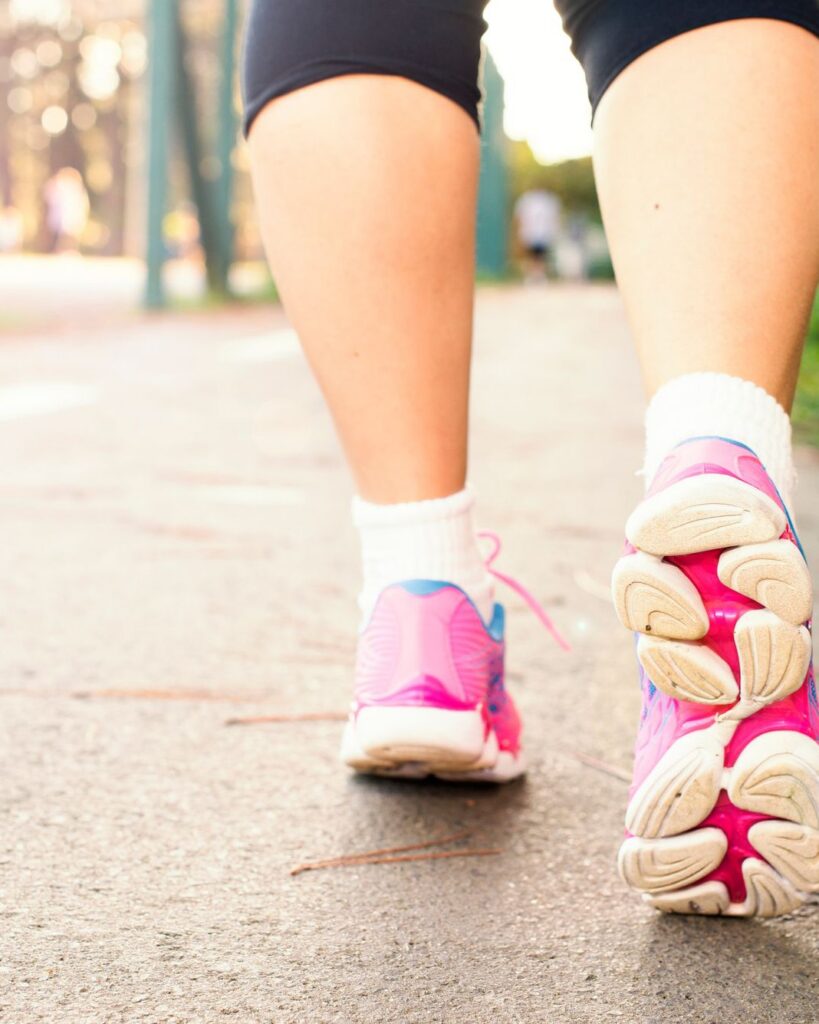
- Walking and ankle work that move blood upward. Calf Pump Focus
- Eases heaviness; does not remove varicose veins. Supportive, Not a Cure
- Lifting, long standing and sitting, breath-holding. What to Adjust
- Stepwise activity after vein procedures. Return After Treatment
Where she sees patients


Exercise for vein Health uses regular leg-muscle movement to support venous return, especially through the calf muscle pump. Walking, ankle movements, cycling and swimming may help manage heaviness or mild swelling, but exercise does not usually remove established varicose veins. New one-sided swelling, severe pain, chest pain or sudden breathlessness needs urgent assessment.
Exercise for vein health describes regular, low-impact physical activity that keeps the muscles of the feet and legs working so that blood can move back towards the heart more easily. It is a supportive habit rather than a cure, and it is often considered alongside other options such as varicose vein treatment when leg symptoms continue.
Exercise for vein health and the calf muscle pump
Exercise for vein health supports the calf muscle pump and may help blood return from the legs toward the heart. The calf muscle pump is the mechanism by which walking and ankle movement contract the lower-leg muscles; these contractions squeeze the deep veins and can assist venous return against gravity. Each step, each rise onto the toes and each ankle flexion contributes a small amount of upward pressure to a system that otherwise has to work uphill for most of the day.
When movement is limited for long periods, blood tends to linger in the leg veins. This pooling, known as venous stasis, is one reason some people notice heaviness, aching or swelling that builds up by the evening. Regular activity may help with this type of symptom pattern, and it is a reasonable part of everyday self-care. It should not, however, be expected to remove veins that are already enlarged and visible.
Chronic venous disease, also known as venous insufficiency, often involves structural problems in the one-way valves inside the veins. Once those valves no longer close properly, blood can flow backwards regardless of how active a person is, and muscle work alone does not rebuild them. Where symptoms are marked, one-sided or getting worse over time, the exercise plan is best shaped around a clinical examination rather than general advice.
Low-Impact Movements That Engage the Leg Veins
Movements for the leg veins usually focus on frequent, low-impact activity that repeatedly engages the feet, ankles and calf muscles. Walking is the most accessible example, and paying attention to a heel-to-toe roll increases the mechanical effect on the calf pump. Simple ankle flexion and extension, performed sitting or standing, can be repeated through the day without equipment. Calf raises, gentle cycling and swimming are other sustainable choices rather than a fixed prescription; the aim is consistency, not intensity.
Swimming has a particular advantage because the body is horizontal and the surrounding water exerts gentle external pressure on the legs. Some people describe their legs as feeling lighter afterwards, although tolerance differs from person to person and depends on fitness, joint comfort and any other medical condition.
Resistance-band work can also be used, with the emphasis on controlled resistance, relaxed breathing and good form. A band looped around the sole of the foot, with the leg pushed slowly forwards or out to the side, engages the calf and thigh muscles that drive the pump. Very high resistance or straining against a load with the breath held is not suitable for everyone, and comfort during the movement is a better guide than effort. Muscle strength helps the pump work, yet it does not always correct faulty valves on its own, which is why minimally invasive vein treatments exist for structural venous problems.
Long periods of sitting or standing can be broken up with short movement pauses. Changing leg position, including uncrossing the legs, may feel more comfortable, although sitting cross-legged is not in itself a direct cause of varicose veins. Sudden one-sided swelling of a leg, especially with pain, breathlessness or chest pain, is an emergency: call 112 in Türkiye or 999 in the UK. Slower changes, such as persistent pain or an alteration in the skin of the lower leg, may need clinical assessment before starting or continuing an exercise routine.
How Much Activity Helps Leg Veins?
There is no vein-specific dose of exercise, and the research base is modest. A 2016 Cochrane review found too little evidence to say how effective exercise is for chronic venous insufficiency, while a 2021 systematic review of trials reported that structured calf training improved calf pump function, calf strength and ankle movement, usually alongside compression. The programmes studied typically ran for 6 to 24 weeks, two to three times a week, and were built around heel raises, ankle movements, stretching and walking rather than high-intensity work.
In practice, most people with leg vein symptoms can follow general adult activity advice of at least 150 minutes of moderate activity a week, which can be split into daily walks of 20 to 30 minutes, with calf raises and ankle movements added on most days. Breaking up long periods of sitting or standing roughly every 30 to 60 minutes with a short walk or a set of heel raises is a more realistic target than any single long session. These are starting points; symptoms, fitness, joint health and any other medical condition change what is sensible for an individual.
| Activity | Generally suitable? | Notes |
|---|---|---|
| Walking (brisk, heel-to-toe) | Yes | The simplest calf-pump exercise; aim for most days. |
| Cycling or stationary bike | Yes | Low impact; keep the saddle height comfortable for the knees. |
| Swimming | Yes | Horizontal position and water pressure ease leg heaviness. |
| Calf raises and ankle circles | Yes | Seated or standing, several short sets through the day. |
| Running | With care | Fine for many; reduce if the legs feel heavier or swell afterwards. |
| Heavy squats, deadlifts, breath-holding lifts | With care | Straining raises abdominal pressure; exhale on effort and keep loads moderate. |
| Long standing or sitting without breaks | Avoid where possible | Move every 30 to 60 minutes; raise the legs when resting. |
| High-impact sport soon after vein treatment | Avoid until cleared | Follow the procedure-specific advice before returning. |
Heart Fitness and Vein Function Are Not the Same
Aerobic exercise that benefits the heart can also support circulation in the legs, although heart fitness and venous valve function are not the same thing. The heart pumps oxygen-rich blood out through the arteries, while the return journey through the veins depends largely on muscle activity, breathing movements and the valves inside the vein walls. A strong cardiovascular system and a well-functioning venous system overlap, but they are not interchangeable.
Regular aerobic activity is widely associated with general cardiovascular wellbeing, and it keeps the leg muscles moving at the same time. It should not be presented as a treatment for valve backflow, also known as venous reflux, which is a mechanical problem inside the vein. What counts as suitable activity varies with symptoms, mobility, joint health and any existing vascular condition. Holding the breath and straining can temporarily raise pressure inside the abdomen, so breathing technique and sensible load selection matter, particularly during heavier resistance work.
Exercise for Seniors With Varicose Veins
Exercise for seniors with varicose veins is usually safest when it is low impact, comfortable and matched to balance, mobility and medical history. Walking at an easy pace, ankle movements performed while seated, calf raises done with a hand on a stable support, a stationary bicycle and, where appropriate, swimming are common examples. The pattern matters more than any particular number of repetitions, and the activity should feel manageable rather than demanding.
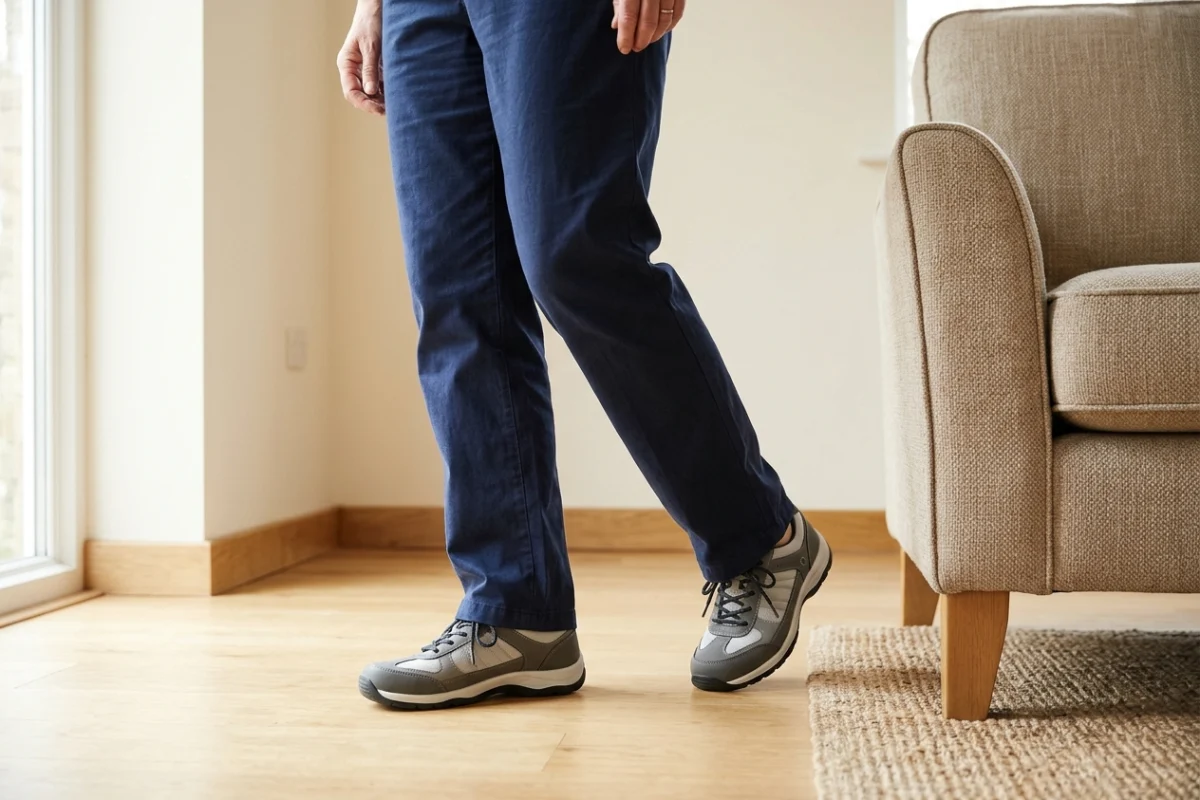
More caution is sensible for anyone with a risk of falls, joint pain, balance problems, heart or lung disease, or leg symptoms that have appeared recently. Compression stockings are sometimes advised in selected situations, but this is a clinical decision rather than a general rule for everyone who exercises. Swelling and heaviness often vary through the day, tending to be least noticeable in the morning, and resting with the legs raised gives some people temporary relief. Symptoms that persist from one day to the next are worth discussing at a medical appointment.
Visible Arm Veins Are Not Varicose Veins
Hand and arm veins may look more noticeable during or after activity, but this does not treat leg varicose veins. Blood flow to working muscles increases, the surface veins widen and the pattern becomes easier to see. The effect is usually temporary and settles as the body returns to rest.
Several other factors influence how visible hand and arm veins are: skin temperature, a low level of subcutaneous fat, hydration status, age and simple genetic variation. Visible veins alone do not necessarily indicate disease. Assessment becomes relevant when there is new one-sided swelling, pain, redness, warmth or a clear change in the colour of an arm, as these may point to a problem in the vessel itself and can require urgent review. Leg venous disease, upper-limb symptoms and purely cosmetic appearance are distinct issues and are not interpreted within the same clinical framework.
Heavy lifting, powerlifting and other high-pressure activities raise pressure inside the abdomen, which can briefly make it harder for blood to leave the legs. For some people who already have venous symptoms, this may increase discomfort, although intense training should not be described as a single cause of varicose veins. Breathing out during the hardest part of a lift, rather than holding the breath, helps limit those pressure peaks, and light movement between heavy sets allows pooled blood to disperse. In people who train intensively, vascular complaints are assessed as part of athlete vascular health, taking training load and symptoms together.
Attention is reasonable when prominent veins in athletes are accompanied by pain, swelling that does not settle after training, or a change limited to one limb.
Exercise After Varicose Vein Treatment
Exercise after varicose vein treatment commonly begins with short, gentle walking, but the timing and restrictions depend on the procedure and the clinician’s instructions. Early light movement is frequently encouraged after modern vein procedures because it helps keep blood flowing and may reduce the risk of clot formation. The treated area, the number of veins addressed, other medical conditions and the technique used can all change what is advised for an individual.
Walking and increasing activity gradually form the usual backbone of recovery after vein treatment, while heavy lifting, high-impact sport and intense interval sessions are often postponed during the first weeks. These categories are not equivalent: brisk walking places a very different demand on the venous system than a maximal lift or repeated jumping. Progression is stepwise, guided by how the leg responds and by the reviewing clinician rather than by a fixed schedule.
Different methods also carry different aftercare patterns; foam sclerotherapy is an injection-based technique, and the instructions following it may differ from those given after thermal or surgical procedures. Compression stockings are worn during this period only when they have been specifically advised after the procedure, and they are not an automatic requirement for everyone. Returning to demanding training before medical approval is not recommended, and any new pain, swelling or skin change during the recovery period should be reported.
When Should Exercise for Veins Stop?
Exercise for veins should stop when new severe leg pain, marked one-sided swelling, redness, chest pain, sudden breathlessness or fainting occurs, and these findings require immediate emergency assessment. Such symptoms can be linked to conditions that need urgent care, including deep vein thrombosis and pulmonary embolism, although no diagnosis can be made at a distance and only an in-person examination can clarify the cause.
Milder but persistent findings deserve attention too, without being an emergency. Swelling that does not settle overnight, night cramps, darkening or hardening of the skin around the ankle, and a growing sense of heaviness are reasonable reasons to arrange a routine vein assessment rather than to continue pushing through discomfort. Where leg symptoms persist, the right balance between activity, compression and treatment is decided after examination by Op. Dr. Arzu Ercan, with consultations in Istanbul at Acıbadem Kozyatağı Hospital and in London at Bilba Clinic and MedPlus Clinic.
Benefits of Exercise for Vein Health
Possible benefits vary from person to person and depend on your health profile; the table below summarises the general aims of the treatment.
| Benefit | What This Means for You |
|---|---|
| Clear expectations | Exercise supports symptoms and circulation; it does not reverse valve damage. |
| A routine that fits daily life | Walking, ankle movements and calf raises that need no equipment. |
| Knowing what to adjust | Guidance on lifting, breath-holding, long standing and sitting. |
| Return to activity after treatment | A stepwise plan matched to the procedure and the reviewing clinician's advice. |
| Warning signs explained | Which leg symptoms mean stop and seek assessment. |
Frequently Asked Questions
Can someone with varicose veins walk every day?
For many people, regular comfortable walking can support the calf muscle pump and may ease feelings of heaviness in the legs. The suitable pace and amount of walking depend on symptoms, mobility and any underlying vein condition.
Which movements are commonly suggested for leg veins?
Low-impact activities such as walking, ankle movements, calf raises, cycling and swimming can help keep leg muscles active. A suitable option is one that can be performed comfortably and does not worsen pain or swelling.
Does exercise make varicose veins disappear?
Exercise may support circulation and symptom management, but it does not usually remove established varicose veins or repair damaged vein valves. Persistent symptoms or visible worsening may need a vein assessment.
Can exercise make veins in hands more visible?
Yes. Arm and hand veins can look more prominent during or after exercise because of increased blood flow and temporary vein dilation. New pain, swelling or colour change in one arm should be assessed.
Should compression stockings be worn while exercising?
Compression stockings may be advised for selected people, including after some vein procedures, but the need and type should be based on clinical advice. They are not appropriate as a universal exercise requirement.
Is cycling good for varicose veins?
Cycling is a low-impact activity that uses the calf and thigh muscles rhythmically and may be comfortable for many people with leg-vein symptoms. Resistance and duration should be adjusted to individual tolerance.
References
- Varicose veins — NHS
- Varicose Veins — Cleveland Clinic
- Varicose Veins — MedlinePlus
- Varicose Veins — Society for Vascular Surgery
- The impact of exercise training on calf pump function, muscle strength, ankle range of motion and quality of life in chronic venous insufficiency: a systematic review — Jornal Vascular Brasileiro, 2021 (PMC)
- Physical exercise for the treatment of non-ulcerated chronic venous insufficiency — Cochrane Database of Systematic Reviews, 2016 (PubMed)
- Get a Second Opinion An independent specialist assessment of your current diagnosis and treatment. Get Started
- Online Doctor Consultation Meet via a secure video call before visiting the clinic. Schedule a Call
- Ask on WhatsApp Send your questions directly to our team. Start Chatting
- Free Preliminary Assessment Share your situation and let's map out a personalised plan together. Apply