
Prominent Veins in Athletes: Why They Happen and When They Matter
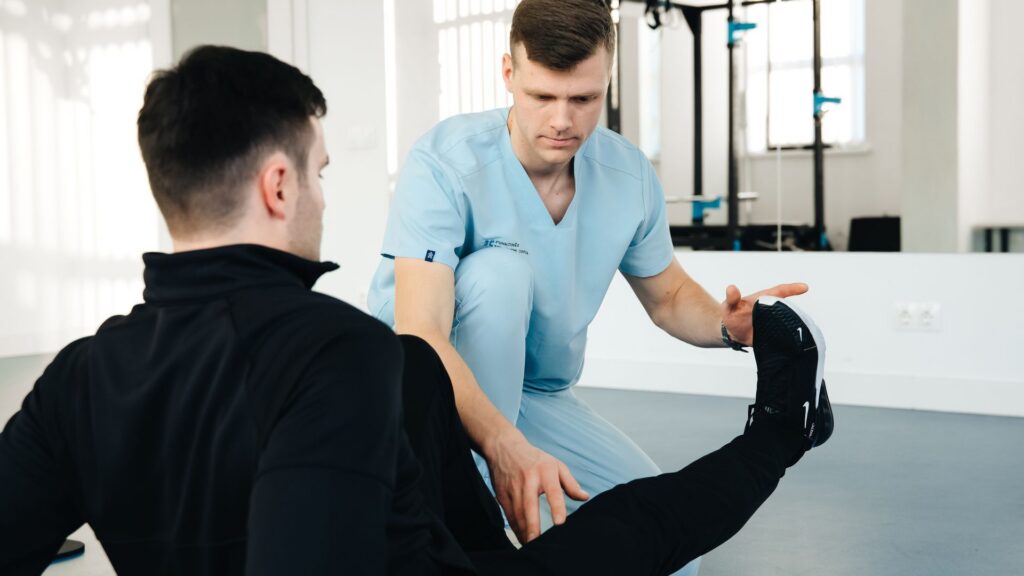
Prominent veins in Athletes are often a temporary exercise-related change caused by increased blood flow, muscle development, heat and lower subcutaneous fat. Persistent or one-sided leg vein changes with pain, heaviness, swelling or skin changes may warrant vascular assessment because visible veins alone do not identify the cause.
- Prominent veins after training commonly reflect temporary increases in blood flow and superficial vein dilation.
- Prominent arm and hand veins in athletes are often less concerning than persistent symptomatic changes in the legs.
- Twisted bulging leg veins, heaviness, swelling and skin changes can be associated with varicose veins or chronic venous insufficiency.
- Family history, previous blood clots, prolonged standing and travel can influence leg-vein symptoms alongside training demands.
- Sudden one-sided leg swelling or pain with chest symptoms requires emergency medical assessment.
Prominent veins are superficial veins that become more visible through the skin, most often during or shortly after exercise. In athletes the look is usually temporary, but it can sometimes persist and point to something worth examining. Ongoing leg symptoms may justify an athlete vascular assessment.
What do prominent veins in athletes mean?
Prominent veins in athletes usually reflect normal circulatory and body-composition changes rather than a vein disease. When muscles work, their oxygen demand rises and blood is delivered more quickly to the tissues, so superficial veins widen. Training also increases muscle volume, which pushes those veins closer to the skin surface, while a lower percentage of subcutaneous fat leaves less tissue covering them. The combination makes veins that were always there considerably easier to see.
Several short-term conditions exaggerate this picture. A hot training environment, a sauna or a hot shower, and temporary shifts in body fluid balance can all make superficial veins look fuller. In most people the appearance settles as the body cools and rests, which is one of the clearest signs that the change is physiological. Appearance alone does not establish varicose veins, chronic venous insufficiency, dehydration or any other circulatory problem; these are clinical conclusions that depend on symptoms, examination and, where appropriate, imaging. What changes the interpretation is persistence: veins that stay prominent at rest, appear in only one limb, or come with pain, swelling or a feeling of heaviness deserve a closer look.
Prominent veins in legs and feet
Leg and foot veins generally warrant more attention than those in the arms and hands because they return blood upwards against gravity and carry a higher pressure load through the day. For this reason, a visible network over the calf, ankle or foot is assessed more carefully than the same visibility on a forearm.
Everyday descriptions and medical terms overlap here. Thicker superficial veins that have become dilated and twisted are what clinicians call varicose veins, while the fine blue-purple, web-like lines on the skin are usually described as spider veins. Seeing spider veins does not by itself confirm that vein valves are failing, and not every visible leg vein is a varicose vein. Patterns are often more informative than appearance: veins that fill after prolonged standing and flatten when the leg is raised, or visibility accompanied by heaviness, itching, burning, ankle swelling, night cramps or skin colour change, are useful details to mention at an examination.
Muscle soreness and training fatigue can mimic or mask venous symptoms. Whether the complaint is one-sided, whether it builds as the day progresses, and whether visible swelling is present help separate the two.
Why do athletes develop prominent veins?
Athletes develop more visible veins mainly because regular training increases circulation, temporarily fills and expands working muscles, and tends to reduce the layer of tissue covering superficial vessels. These three effects reinforce one another, which is why the change is common in people who train consistently rather than being unusual.
Visibility also fluctuates. Workout intensity, ambient temperature, the muscle group being used and individual anatomy all influence how much the veins stand out on a given day. Hydration status can affect the appearance too, but fluid balance cannot be judged reliably from veins alone, and vascularity is not a measure of fitness, performance or health status.
In the arms, forearms and hands, prominent veins are most often linked to muscle volume, lower body fat and exercise-related blood flow, and this upper-limb pattern carries different weight from leg findings. New swelling, pain or colour change confined to one arm is a different matter and is worth a medical assessment rather than being attributed to training.
Risk factors behind varicose veins in athletes
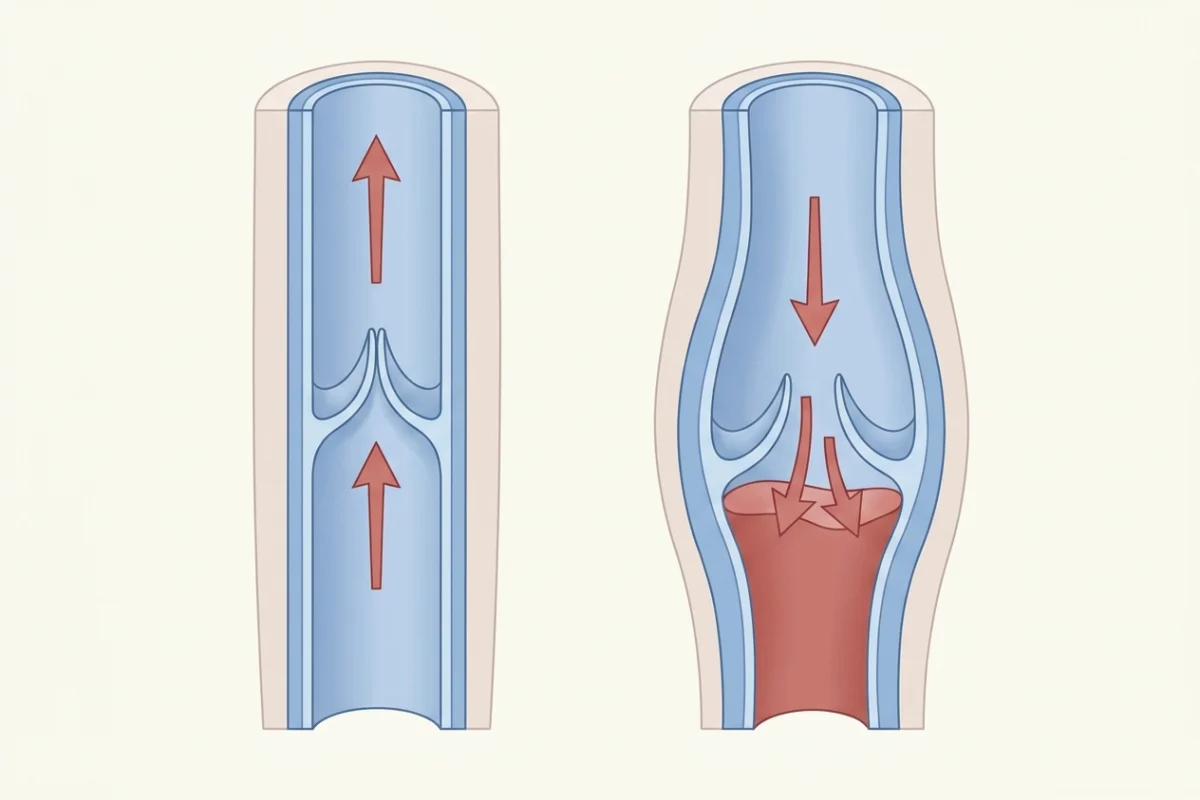
Sport by itself cannot be identified as the cause of varicose veins; inherited susceptibility of the vein valves and other health factors are often more relevant in an individual athlete. Venous valves keep blood moving upward and limit backflow, and when their function declines blood tends to pool in the legs.
The calf muscle pump is central to this balance. Contraction and relaxation of the calf muscles help push venous blood towards the heart, and regular, moderate movement supports that function. Mechanical factors can still add strain in susceptible people: prolonged standing, high repetitive training loads, hot conditions and heavy lifting that raises intra-abdominal pressure may make existing symptoms more noticeable. Breath-holding during maximal strength attempts briefly raises chest and abdominal pressure, which is known to strain venous return momentarily. None of these, taken alone, is evidence of disease.
Factors unrelated to sport also contribute: family history, previous blood clots, age, hormonal conditions and body weight. Frequent long journeys by plane or bus and work that requires standing all day can add to the symptom burden, and a crowded competition schedule with short recovery intervals may make leg fullness more apparent. Reduced training comfort or persistent leg fatigue can influence athletic performance, but vein appearance on its own does not establish a performance problem.
When should prominent leg veins be taken seriously?
Persistent, worsening or one-sided prominent leg veins deserve closer attention when they occur alongside pain, heaviness, swelling, itching, burning, night cramps or skin changes. Chronic venous insufficiency describes impaired vein-valve function that allows blood to pool in the legs; the backward flow involved is often referred to clinically as venous reflux. Longer-term signs of sustained venous pressure include darkening of the skin around the ankle, hardening of the skin tissue and small wounds that heal slowly.
Sudden one-sided leg swelling, pain, redness or warmth, particularly together with unexplained shortness of breath or chest pain, requires urgent assessment and 112 should be called. Some findings point away from the venous system: calf pain brought on by walking and relieved by rest, a cold foot or leg, or colour change can suggest an arterial circulation concern and need clinical evaluation in their own right. In symptomatic varicose veins and related venous conditions, appearance, symptoms and ultrasound findings are interpreted together, and medical decisions follow a clinician’s examination with imaging where appropriate.
How are prominent veins in legs assessed?
Assessment begins with when the symptoms started, how they relate to training sessions, personal and family medical history, and a detailed examination of the legs. The examination commonly compares both legs while standing and lying down, since vein filling differs between positions.
During the examination, swelling, skin colour and texture, temperature differences between the two sides and the course of the visible superficial veins are reviewed. When it is considered necessary, venous Doppler ultrasonography can assess the direction of blood flow and the function of the valves; venous mapping refers to using this method to map the course of the veins and the areas where reflux occurs. Imaging findings, reported symptoms and physical examination are interpreted together rather than relying on appearance alone.
A few practical notes help the appointment: which training session worsens the symptom, whether elevating the leg relieves it, and which medicines or supplements are being used. Cramps in particular can relate to muscle loading, fluid and electrolyte balance or other medical causes, so a single symptom is not enough for a diagnosis. Follow-up timing is individualised, and is usually discussed when symptoms persist or when there is a family history or previous vascular disease.
Treatment options for symptomatic leg veins
Treatment is based on symptoms, examination and ultrasound findings rather than how visible a vein happens to be. Supportive measures often come first and may include adjusting training load, taking movement breaks during long journeys or prolonged sitting, maintaining adequate fluid intake, cool-down and stretching activity that keeps the calf pump working, and appropriately selected graduated compression.
Compression stockings can relieve leg fatigue and oedema for some people, but the pressure level and wearing schedule should be individualised; unsupervised use may be unsuitable when arterial circulation is in question. Where examination and ultrasound confirm significant venous insufficiency, treatment may include non-surgical or minimally invasive options depending on vein anatomy and reflux findings.
In suitable cases, the technique is chosen according to which veins are affected, the reflux pattern and symptom severity, not according to how the leg looks during training; varicose vein treatment planning therefore rests on the clinical picture. For competitive athletes, season planning, training goals and the timing of any procedure can reasonably be discussed together. Every interventional procedure carries potential risks, so options are planned after detailed information has been given, and supportive measures do not replace treatment when reflux is significant.
Which symptoms need urgent vascular assessment?
A cardiovascular surgery assessment may be appropriate for persistent or increasing leg pain, stubborn swelling, heaviness that interferes with daily activity, or newly prominent tortuous veins. Symptoms that disrupt training rhythm, persistent one-sided changes, new arm swelling or pain, and skin changes around the ankle are better evaluated than dismissed as ordinary training fatigue. Sudden one-sided swelling together with chest symptoms or breathlessness remains an emergency presentation requiring immediate hospital care. Expectations about return to activity vary with the procedure performed, the recovery course and the person’s overall condition.
Exertional calf pain, a cold limb or skin discolouration can indicate an arterial circulation concern and should be assessed clinically. Suitability and the plan of care are determined by the examination and Doppler ultrasound evaluation carried out by Op. Dr. Arzu Ercan, with assessments performed at the hospital practice in Istanbul.
Frequently Asked Questions
Are bulging veins during weight training dangerous?
Bulging veins during weight training are often temporary and relate to increased blood flow, muscle contraction and less tissue covering the superficial veins. Persistent pain, swelling, colour change or a vein change that does not settle with rest should be assessed.
Do prominent veins in hands mean dehydration?
Hand veins can look more noticeable with exercise, heat, age, body composition or temporary fluid shifts. Vein appearance alone cannot confirm dehydration or a circulation problem.
Do prominent leg veins always mean varicose veins?
No. Some leg veins are simply more visible, while varicose veins are usually enlarged and twisted superficial veins. Symptoms, examination and, when needed, venous Doppler ultrasound help distinguish the possibilities.
Can exercise prevent varicose veins?
Regular movement can support the calf muscle pump, but it may not remove factors such as family history, previous clots or susceptibility of the vein valves. Exercise is best seen as a supportive measure within overall vascular care.
Are compression stockings suitable for every athlete?
Compression stockings may help some athletes with leg fatigue or swelling, but the pressure level and timing should reflect the person’s symptoms, sport and circulation assessment. They may be inappropriate without advice when arterial circulation is a concern.
Can sudden swelling in one leg be training fatigue?
Sudden one-sided swelling and pain should not be assumed to be training fatigue. Redness, warmth, shortness of breath or chest pain require urgent medical assessment.