
The Role of Vascular Health in Cellulite Treatment
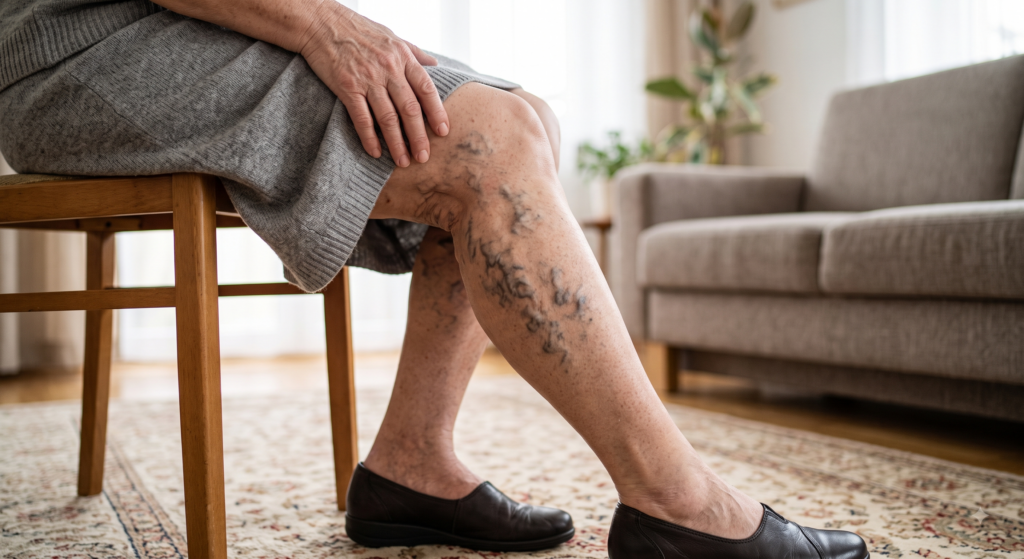
The role of Vascular Health in Cellulite Treatment concerns how venous and lymphatic conditions may affect leg swelling, comfort, and the visibility of existing cellulite. Cellulite is mainly related to subcutaneous tissue structure, so circulation problems should be identified and managed when symptoms suggest they are present. Persistent or one-sided swelling needs medical assessment rather than cosmetic treatment alone.
- Cellulite is a common dimpled skin-surface change linked mainly to subcutaneous fat and connective-tissue structure.
- Venous insufficiency or lymphatic dysfunction can contribute to leg swelling that may make existing cellulite more noticeable.
- Varicose vein treatment may improve symptoms of venous disease, but it is not a direct treatment for cellulite.
- Persistent swelling, heaviness, visible veins, or skin changes can justify a vascular assessment before planning cosmetic care.
- Sudden one-sided leg swelling with chest symptoms requires urgent medical attention.
The role of vascular health in cellulite treatment is a supporting one: it concerns whether venous or lymphatic problems are adding swelling and discomfort to a surface change that arises from fat lobules pressing upwards between fibrous connective-tissue bands. Circulation is a real but limited factor, which is why such findings are often considered alongside cellulite treatment options.
How does vascular health influence cellulite treatment?
Vascular health can influence leg swelling, tissue comfort and, indirectly, how visible surface irregularity appears in people who also have venous or lymphatic problems. When fluid collects in the subcutaneous tissue, the legs may feel fuller and the dimpled texture may stand out more. This relationship does not explain every case of cellulite, and many people with entirely normal leg veins still have pronounced dimpling.
The practical question is therefore narrower than it first appears: it concerns recognising when circulation-related findings deserve attention alongside a cosmetic concern. Heaviness, ankle swelling, visible varicose veins or skin changes may point to an underlying venous problem that is worth assessing in its own right, regardless of whether the appearance of the skin changes afterwards. Understanding that distinction helps keep expectations realistic for both cosmetic and medical goals.
Cellulite structure beneath the skin
Cellulite describes an uneven skin surface created by the architecture of the tissue just beneath it. Fat lobules sit within compartments separated by vertical fibrous septa; when these lobules project upwards while the septa tether the skin downwards, the result is a dimpled or puckered contour. The orange-peel appearance commonly called cellulite is, in medical terms, a structural change of subcutaneous tissue rather than a disease of the skin itself.
Several factors are thought to contribute. Genetics, sex-related differences in the arrangement of connective tissue, hormonal influences, skin thickness and the distribution of body fat may all play a part, and their relative weight differs from person to person. Because of this, cellulite can occur across a wide range of body sizes; weight alone does not determine whether it is present or how pronounced it looks.
Reduced circulation is sometimes described as the cause of cellulite, but current understanding does not support that as a universal explanation. Circulatory changes may accompany or accentuate the appearance in some people without being the origin of the underlying tissue structure.
Why can leg oedema make cellulite look more noticeable?
Oedema, meaning fluid accumulation within the tissues, can make the legs feel fuller and tighter and may make existing surface irregularity more obvious. As tissue volume increases, the tethering effect of the fibrous septa tends to become more visible, so the same skin can look smoother on some days and more dimpled on others.
The mechanism is best described cautiously. When pressure within the small vessels rises, or when fluid is cleared from the tissue spaces more slowly than it arrives, fluid can move into the surrounding tissue. How much this alters visible texture varies considerably between individuals, and it is not accurate to say that fluid retention creates cellulite. Equally, no drainage technique should be presented as a permanent way of removing it.
It also helps to separate two different situations. Mild swelling that appears after a long flight, a day of standing, hot weather or around hormonal fluctuations usually settles with movement and rest. Swelling that is persistent, gradually progressive, clearly worse on one side, or accompanied by skin thickening, discolouration or recurrent infection belongs to a different category and warrants clinical assessment. In that case the question is no longer cosmetic; the aim is to identify whether a venous, lymphatic or other medical cause is present, since the management of chronic oedema follows its cause rather than the appearance of the skin.
Chronic venous insufficiency and leg symptoms
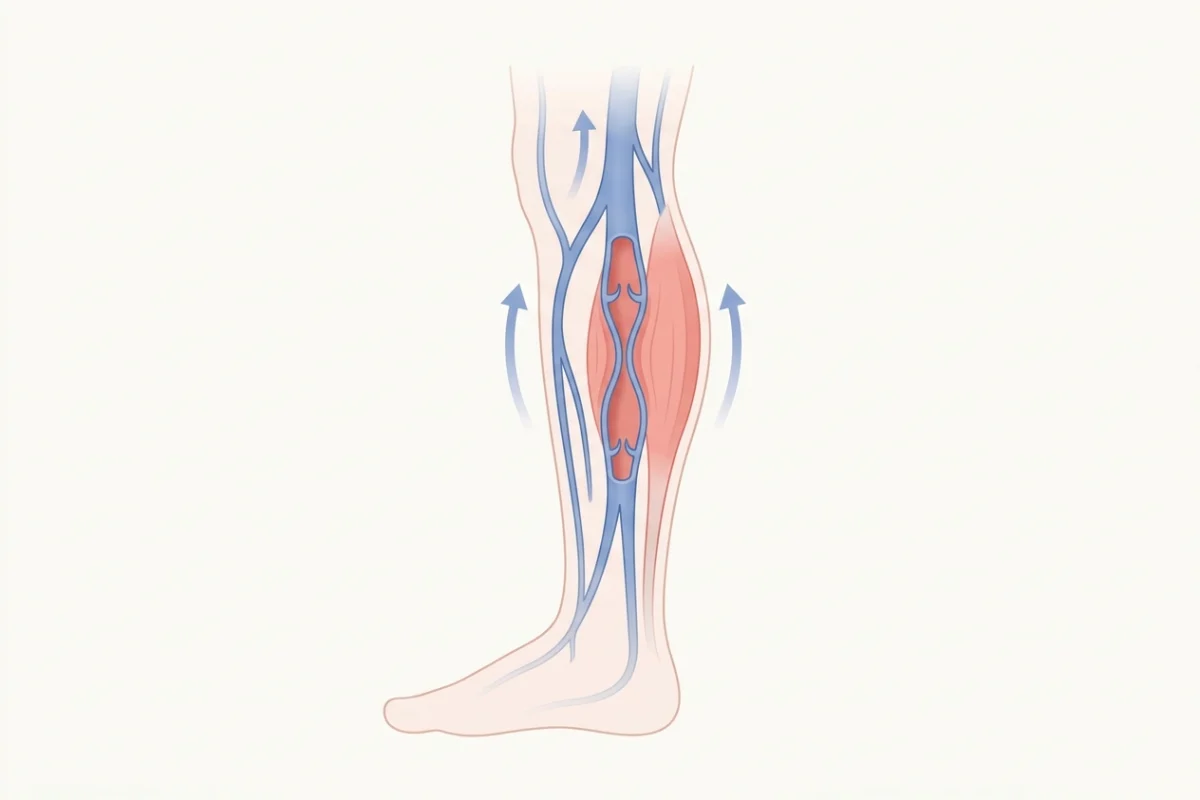
Chronic venous insufficiency occurs when the leg veins return blood towards the heart less efficiently than they should, often because venous valves no longer close effectively and blood refluxes downwards. Pressure within the veins rises, particularly on prolonged standing, and symptoms tend to build through the day.
Commonly reported findings include a sense of heaviness, aching, ankle swelling towards the evening, itching, visible varicose or spider veins, and in longer-standing cases changes in skin colour or texture around the lower leg. These features may occur together or separately, and none of them alone confirms a diagnosis; persistent symptoms are what make a clinical assessment reasonable. Where ultrasound confirms significant reflux, varicose vein treatment may be considered, with the method selected according to which veins are affected and the person’s overall health.
Expectations after any such procedure depend on the technique used, so questions about activity, compression and recovery after vein treatment are usually discussed in relation to the chosen option. It is worth noting that venous disease may amplify oedema and discomfort without establishing the cause of cellulite, which remains a separate structural matter.
Could lymphoedema be mistaken for cellulite?
Lymphoedema and cellulite can coexist or look similar at a glance, yet they describe different processes and should not be treated as interchangeable. Lymphoedema is persistent swelling related to impaired lymphatic transport, whereas cellulite refers to dimpling arising mainly from the architecture of the subcutaneous tissue. A limb affected by lymphoedema may have an irregular surface, which is one reason the two are sometimes confused.
In chronic lymphoedema, protein-rich fluid may remain in the tissues and, over time, tissue fibrosis can develop, altering texture and making the swelling less responsive to simple elevation. Features that make lymphatic assessment more relevant include swelling that does not settle overnight, a sensation of tightness, repeated skin infections in the same limb, or a clear change in tissue consistency. These observations are a reason to seek assessment rather than a basis for self-diagnosis. Where a lymphatic problem is confirmed, manual lymphatic drainage may form part of a clinically supervised programme.
A further distinction concerns fat distribution. When both legs show a disproportionate, often tender increase in fat tissue that spares the feet, and the pattern does not fit ordinary swelling, a lipoedema assessment may be appropriate. Separating these possibilities early tends to be more useful than treating the surface appearance in isolation.
Does treating varicose veins remove cellulite?
Treating varicose veins is not a direct cellulite-removal treatment. Where confirmed venous reflux is contributing to swelling and heaviness, addressing it may reduce the tissue fullness that makes leg texture more noticeable in some people, but the dimpling itself arises from connective-tissue structure that a venous procedure does not alter.
The clinical aim of venous treatment is the management of venous disease and its symptoms, not a cosmetic outcome. How much visible change follows depends on how much of the appearance was driven by oedema, on the person’s connective-tissue architecture, and on whether other conditions such as lymphatic impairment are present. For this reason, vein treatment is not a substitute for a dedicated plan addressing cellulite, and improvement in skin smoothness cannot be promised in advance.
Which daily habits support leg circulation?
Regular movement, limiting long periods of immobility where possible, and managing the factors that contribute to swelling may support venous return and general leg comfort. Walking, swimming and cycling activate the calf-muscle pump, which assists the upward movement of blood; short movement breaks at intervals can help during extended sitting or standing.
Diet deserves a measured note. Reducing an excessive salt intake may help some people manage fluid retention, though it is not a treatment for cellulite or for vascular disease. Adequate hydration supports normal body function rather than flushing out toxins, and alternating warm and cool showers, while often recommended, has limited evidence for changing either cellulite or venous disease.
These general measures should be adapted when a clinician has advised compression stockings, specific activity modification or treatment for a diagnosed condition, since individual circumstances can change what is appropriate.
When does leg swelling need urgent assessment?
Sudden swelling of one leg, particularly with pain, warmth or a change in colour, requires prompt medical assessment, because the possible causes extend well beyond anything related to cellulite. If sudden one-sided swelling is accompanied by chest pain, shortness of breath, fainting or coughing up blood, 112 should be called.
Swelling that develops slowly and affects both legs is usually less urgent, yet it still merits a non-urgent medical review when it is persistent, repeatedly recurring, or associated with visible veins, heaviness, itching or changes in the skin of the lower leg. Noting when the swelling began and what makes it better or worse is helpful at that appointment.
What is the role of vascular health in cellulite treatment planning?
Vascular assessment is used to establish whether the reported symptoms point to venous disease, lymphatic dysfunction or another cause of leg swelling that should be addressed alongside a cosmetic concern. In broad terms it involves a clinical history, physical examination and, where indicated, venous duplex ultrasound to study blood flow and identify reflux. Arterial problems are a separate matter; reduced walking distance, calf pain on exertion or cold, pale feet are among the peripheral artery disease symptoms that call for their own evaluation.
Any plan is then individualised, particularly when oedema, varicose veins, pain or asymmetrical swelling are present, and suitability is determined by examination rather than by appearance alone — in Istanbul this assessment, including Doppler ultrasound where needed, is carried out by Op. Dr. Arzu Ercan. A cardiovascular surgeon’s assessment mainly serves to distinguish circulation-related symptoms from changes that are confined to the surface of the skin.
Frequently asked questions
Is cellulite caused by poor circulation?
Poor circulation is not considered a universal or sole cause of cellulite. Venous or lymphatic problems can contribute to swelling and discomfort that may make existing skin dimpling more noticeable.
Can cellulite occur in people who are not overweight?
Yes. Connective-tissue structure, genetics, hormonal influences, skin thickness and fat distribution can all contribute, so cellulite may occur across a wide range of body sizes.
Can lymphatic drainage cure cellulite?
Manual lymphatic drainage may be used for selected lymphatic conditions under clinical guidance, but it is not a proven cure for cellulite. Its role depends on whether clinically relevant oedema or lymphoedema is present.
Should visible veins and cellulite be assessed together?
They may be assessed together when visible veins occur with heaviness, pain, swelling, itching or skin changes. A clinician can determine whether venous disease is contributing to the leg symptoms.